

Zirconium oxide has been widely used for its excellent high temperature physical and mechanical properties, especially for key components used in harsh conditions.The thermal stability of zirconia products is poor because of its low thermal conductivity and high thermal expansion coefficient.However, the thermal stability of ceramic products made from partially stabilized zirconia materials is the best.Therefore, the production of structural zirconia ceramics is often made from partially stable zirconia materials rather than fully stable zirconia materials.The production of zirconia structural ceramics generally USES 3mo1 % Y203 stable zirconia superfine powder.The production process of zirconia ceramic structural parts is discussed from two aspects of forming and sintering.
At present, there are three kinds of forming methods for zirconia structural ceramics: hot-die casting, dry pressing and isostatic pressing.
1. Hot die-casting molding
Small products or products with complex shapes for zirconia structural ceramics.Generally, hot die casting molding method is adopted.The forming method is simple, especially suitable for small and medium sized products with large batch or complex shape.But zirconia hot die casting products is easy to appear when arrange wax cracking, deformation and other defects, it is because the zirconia ceramic slurry particle size small, powder specific surface area is big, hot die casting size, modulation of paraffin wax and oleic acid and significantly higher than that of other ceramic products, resulting in body contraction is big, easy to appear when arrange wax cracking, deformation defects, etc.Therefore, when debugging the slurry, it is necessary to understand the amount of paraffin and oleic acid added and the way of adding people, and design a reasonable paraffin burning curve and other relevant technical parameters, so as to avoid the above defects.
2. Dry pressing
Small and medium sized zirconia ceramics with simple shape and suitable for dry pressing are usually formed by dry pressing.Zirconia ceramics there was a common problem is the product of dry pressing layering, this is because zirconia ultrafine particles of the powder granulation material is very thin, so light particles, liquidity is poor, dry pressing molding will easily appear statified phenomenon.Learned from the production practice, layered with the molding mould finish product and cooperate with the situation, the molding pressure, pressure mode speed, pressure and speed of the holding time, parting ways, parting have a relationship in which the following are the several factors influence on dry pressing molding points above are as follows:
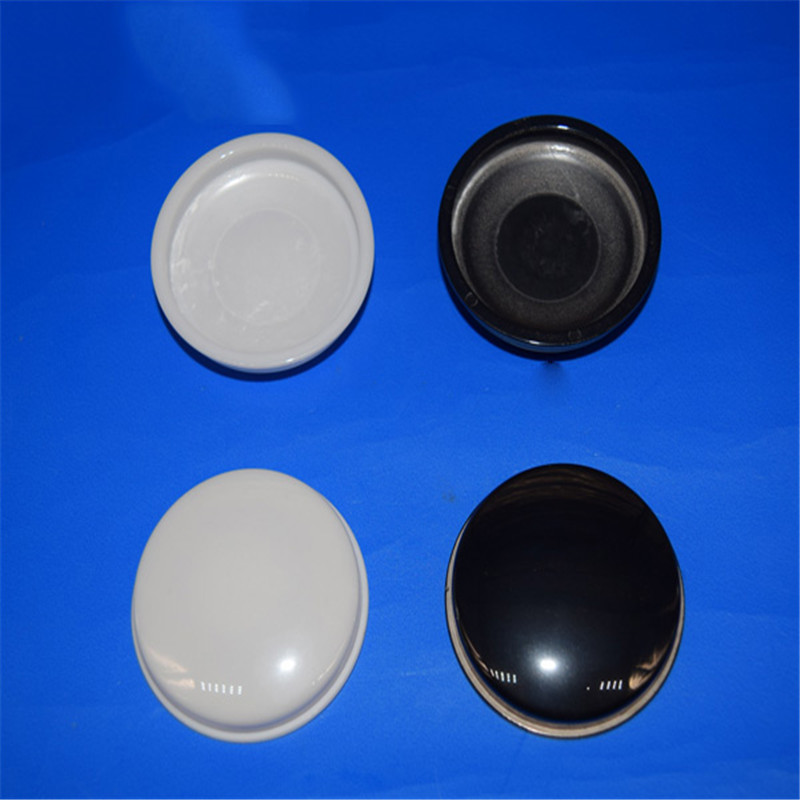
A. Finish and fit of the mold
Dry pressure molding requires high quality of the mould. First, the hardness of the mould is required to meet certain requirements.Because zirconia stabilized material particles is very thin, liquidity is poor, so for the mould finish requirement is very high, if the finish can not meet the requirements, the dry pressing effect of material flow, leading to the emergence of the layered.Bad cooperation at the same time, if the mould, gap is big, because zirconia powder fine grain, pressed powder will issue from the mould clearance, resulting in mould powder, less around such pressing around cannot compaction, which will appear due to inconsistent pressure transmission layer, therefore with requirements for mould is higher.
B. forming pressure
The forming pressure is very important in the process of zirconia dry pressing.If the pressure is too small, the density of the product after burning is small, the product shrinks greatly, and the degree of compaction of the billet body is not enough, stratification is easy to occur.But the pressure is too great, the billet is also prone to crack, lamination and difficulty in mold release.Proper forming pressure needs to be explored through production practice.
C. pressure method
There are two kinds of pressure methods when general dry pressing molding, one is single side pressure, the other is double side pressure.When the single side pressure, one end of the compression stress directly, a significant pressure gradient, powder more illiquid, the billet in the greater the pressure difference, the more prone to delamination.Double pressure, direct pressure on both ends of the body, so the density at both ends, the middle density is small, the pressure gradient of the effective transmission distance is half that of single pressure, so the body's density is much more uniform than single side pressure.Therefore, zirconium oxide ceramics should be pressurized on both sides in dry pressing.
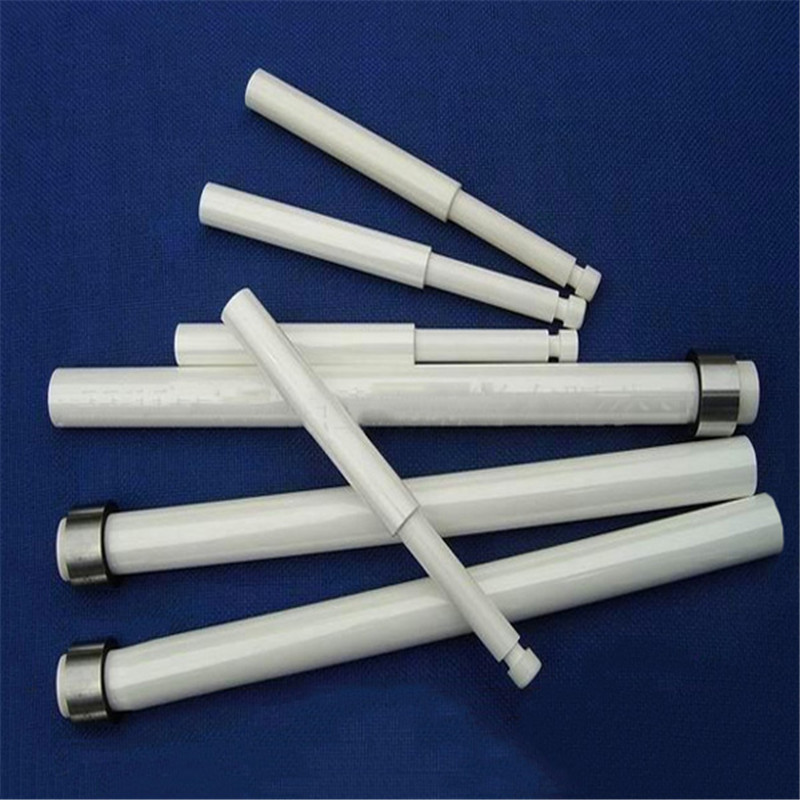
D. Pressure speed and pressure holding time
Poor control of pressure speed and pressure retention time will also cause the formation of zirconia billets.Die falling speed should be slow some, such as pressure too fast, the gas is not easy to drain in the body, leading to the body appear statified, surface density and loose the middle, and the phenomenon such as there are air bubbles.Such as the holding time is too short, the pressure is not due to the depth of the external force has been uninstalled, such gas is not easy to drain in the body, it will be difficult to get the ideal body, will cause the body appear the phenomenon such as layering and existing bubbles.At the same time pressure preservation time should be uniform, otherwise it will lead to uneven thickness of products, resulting in waste products.
E. demoulding mode and demoulding speed
In general, tool is used to push the billet out of the die cavity when dry pressure is removed.The practice shows that the tool should be smooth when the mould is removed, otherwise it will cause the crack due to uneven force on the billet body.In a word, dry pressing and the above several factors are all related to the formation of an ideal body, the above aspects should be well controlled.
3. Isostatic pressing molding
For special shape and large size zirconia structural ceramics, isostatic pressing is required.Isostatic pressing molding pressure on the body due to the direction of the uniform is equal, and pressure is big, thus forming the body after the high density, uniformity, good burning into narrow, not easy to deformation, cracking and delamination.Easy to appear when the molding method can avoid dry pressing the layered, especially the zirconia products forming thicker, layered, appear easily when dry pressing and isostatic pressing molding can be avoided, so the molding method is commonly used methods for production of zirconia products.But the body need to process after the isostatic pressing molding, so will waste part of raw material, at the same time, because the body is very hard, processing more troublesome, and slow processing speed requirements, otherwise the body prone to rupture, the production efficiency is not high.
.Firing
At different temperatures, zirconium oxide has three isomorphic forms, namely, cubic crystal system, monoclinal crystal system and tetrahedral crystal system.The transformation temperature of zirconia crystal is as follows:
The conversion from monoclinal to tetrahedral has a volume change of about 7%.When heated, the volume shrinks from monoclinal zirconia to tetrahedral zirconia.The shrinkage and expansion did not occur at the same temperature. The former was about 1200 absolute C and the latter was about 1000 absolute C.
The sintering temperature of zirconia ceramics and the raw material, the preparation methods, fineness, the amount of additive type and how many and different, generally between 1500 ~ 1650 DHS C, so the firing curve of zirconia ceramics is not regulated, and
